

Operating in demanding manual trades exposes the human body to extreme physical stress, with the hands bearing the brunt of the daily workload. For mechanics, carpenters, construction workers, and heavy machinery operators, their hands are their most valuable tools, yet they are also the most vulnerable to severe structural skin damage. Daily exposure to abrasive materials, degreasers, hydraulic fluids, concrete dust, and freezing winter weather rapidly strips the skin of its natural protective lipids. This continuous depletion leaves the skin vulnerable to deep, painful splits, bleeding cracks, and thick, stubborn calluses that limit manual dexterity and make everyday tasks agonizing. Many workers dismiss these injuries as a normal part of the job, unaware that untreated skin cracks can lead to serious bacterial infections that can force them off the job site entirely. Investing in an industrial-strength moisturising cream for tough hands provides a positive, highly effective tool that rapidly repairs deep skin splits while actively softening rough, hardened tissue. By applying a heavy-duty, clinically targeted formula, manual laborers can successfully rebuild their skin barrier, prevent painful cracks from returning, and maintain peak professional productivity without enduring constant physical discomfort.
Understanding the unique biology of manual worker skin is crucial to solving the problems of severe cracking and excessive callus formation. The skin on the palms of the hands and the soles of the feet is naturally thicker than the skin on the rest of the body, designed by nature to withstand friction and pressure. However, when the skin is repeatedly bombarded by harsh alkaline substances like wet cement, or drying solvents like brake cleaner, its natural moisture-retaining capabilities are completely destroyed. This chronic dehydration causes the outer layer of skin to become brittle, inflexible, and prone to splitting open along natural movement lines under the stress of heavy lifting or tool handling.
The Science of Thick Calluses: Why Standard Lotions Fail Hardworking Skin
When standard retail moisturizers are applied to heavily calloused hands, they almost always fail to provide noticeable relief. This failure occurs because regular cosmetic lotions are designed for thin facial or body skin, relying on weak water-based formulas that simply sit on top of dead skin cells without ever penetrating the thick, hardened layers of a manual worker’s palm.
A callus is the body’s natural defensive response to chronic friction and localized pressure. The skin accelerates its cellular production, building up dense layers of dead keratinocytes to protect the underlying tissue from tearing. While this process prevents immediate blistering, an overgrown callus eventually loses its natural elasticity. When the hands are flexed, the rigid, unyielding callus splits open into the deeper, nerve-rich layers of the dermis, creating deep fissures that bleed and struggle to heal due to the constant movement of the hand. To break down this hardened barrier, a skin treatment must contain potent keratolytic agents that can actively dissolve the intercellular bonds holding the dead skin cells together.
The Power of High-Urea Formulas: Dual Exfoliation and Deep Hydration
The absolute gold standard ingredient for managing severe industrial skin damage is urea, a naturally occurring compound within the skin’s natural moisturizing factor group. In high-potency clinical concentrations, urea performs a unique dual-action function that is essential for restoring heavily calloused hands.
First, urea acts as a powerful keratolytic agent, meaning it softens and breaks down the tough, fibrous keratin proteins that make up thick calluses. This chemical exfoliation gently sheds the built-up layers of dead, rough skin without requiring aggressive pumice scraping or filing, which can accidentally thin or tear the healthy skin underneath. Second, urea is a highly efficient humectant, possessing an incredible molecular capacity to attract water from the deeper layers of the body and lock it firmly into the outer skin matrix. This deep, internal hydration restores natural flexibility to the skin barrier, allowing the hands to bend, grip, and stretch under heavy workloads without cracking or splitting open.
Closing the Fissures: Rapid Skin Regeneration and Non-Greasy Protection
Healing hands that are already covered in painful, open skin splits requires more than simple hydration; it demands active ingredients that accelerate cellular repair and seal the wounds against external irritants. When a deep crack forms, the internal tissue is completely exposed to toxic chemicals, grime, and environmental bacteria, which triggers localized inflammation and stalls the body’s natural healing process.
High-performance workman creams combine high-concentration urea with secondary skin restorers like vitamin E, AHAs, and natural skin softeners. Vitamin E acts as a potent antioxidant that calms inflammation and supports rapid cellular regeneration, helping to knit the edges of split skin back together within days. Furthermore, a truly effective industrial hand cream must be formulated to absorb rapidly without leaving a slick, greasy residue behind. Manual workers cannot afford to lose their grip on heavy power tools, steering wheels, or delicate electronic components due to a slippery film on their palms. Modern heavy-duty formulas utilize specialized emulsion techniques that deliver intense moisture into the deeper skin layers while leaving the surface completely dry, matte, and ready for immediate work.
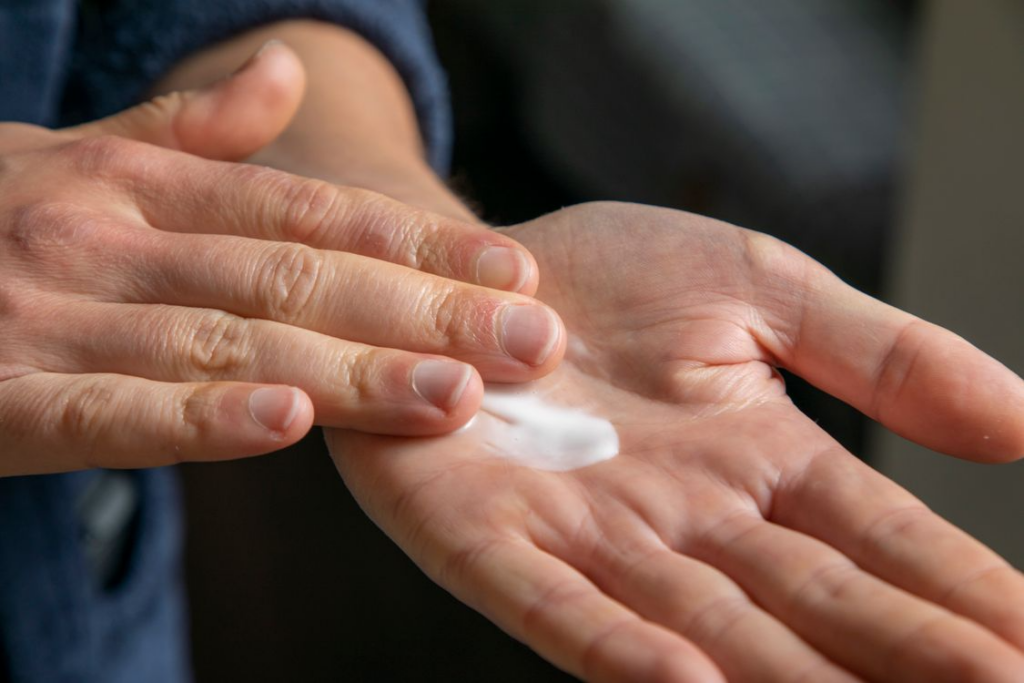
Image from Pexels
Comparing Skin Treatment Systems: Cosmetic Lotions vs. Industrial Repair Creams
Evaluating the clear structural differences, penetration levels, and real-world durability between standard cosmetic hand lotions and high-potency industrial repair creams highlights why manual workers require a targeted formula.
- Target Layer Penetration: Regular lotions only sit on the thin, surface layer of skin, while industrial creams deeply penetrate dense, hardened callus tissue.
- Core Chemical Mechanism: Standard products rely on superficial oils to temporarily smooth the skin, whereas heavy-duty repair creams utilize high-potency urea to dissolve dead keratin bonds.
- Barrier Protection Factor: Cosmetic lotions wash away completely the very first time you wash your hands, while industrial shield formulas create a resilient, long-lasting glove effect that survives multiple washings.
- Healing Action on Open Splits: Basic lotions can sting open cuts due to fragrances and fail to heal them, while clinical repair creams quickly close painful fissures and soothe raw tissue.
By studying these direct performance differences, tradespeople and industrial workers can easily see that choosing a specialized, high-potency repair cream is the only reliable way to protect their hands from chronic, work-related skin breakdown.
Defending Against Chemical Stripping and Industrial Contaminants
For tradespeople like mechanics and auto body technicians, the daily damage to their hands goes beyond physical friction. The continuous use of heavy solvents, petroleum products, and alcohol-based industrial hand cleaners strips away the skin’s protective acid mantle, leaving it defenseless against toxic chemical penetration.
Over time, this chemical stripping can lead to contact dermatitis, a painful chronic inflammatory skin condition characterized by severe redness, intense itching, and weeping blisters. Once a worker develops chronic dermatitis, their productivity drops sharply, and even basic tasks become incredibly painful. Applying a high-potency barrier cream before starting a shift, and immediately after washing up, creates a microscopic, defensive shield that mimics the skin’s natural lipid layer. This barrier blocks harsh chemical solvents and fine grease particles from embedding deep within the skin pores, making cleanup at the end of the day much easier while preserving the overall structural integrity of the hands.
Conclusion: Maintaining the Manual Worker’s Greatest Tool
Taking proactive control of your skin health is an absolute professional necessity for anyone who earns a living through hard manual labor. Ignoring severely dry, cracked, or heavily calloused hands is a dangerous path that leads to chronic pain, reduced grip strength, and the very real risk of developing severe, career-halting skin infections.
By integrating a high-potency, urea-based repair cream into your daily work routine, you can completely reverse the cycle of industrial skin damage. This strategic approach uses targeted chemical exfoliation to safely break down thick calluses, seals open, bleeding splits with fast-acting moisturizers, and creates a resilient, non-greasy shield that protects your skin from harsh chemicals and extreme weather. Treat your hands with the same care and respect you give to your finest power tools, invest in a premium industrial-strength formula, and step onto the job site with the complete confidence that your skin is fully protected, resilient, and ready for the hardest tasks.
___________________________________________________________________________
Steven Lagrimas is a freelance writer specializing in STEM, business, health, politics, and the social sciences. His work explores the intersection of society, governance, innovation, and emerging global trends shaping communities and industries today.