

Bizzoo Casino and other major casinos offer roulette in three main formats, each with different wheels and rules. A croupier spins a wheel with numbered pockets, you place bets on where the ball will land, and then the results are announced. What changes between versions is the wheel structure and the house advantage this creates.
European roulette uses a wheel with 37 pockets numbered 0 to 36. American roulette has 38 pockets because it includes both 0 and 00. French roulette follows the European format with 37 pockets but applies special rules that can lower house edge in certain situations. On a European wheel, your chances of winning on a single number are 1 in 37. On an American wheel, those odds crash to 1 in 38 because of the extra double zero.
The difference might seem small, but over many spins, it costs you money. The American version gives the house a 5.26% edge, while European roulette offers only a 2.70% edge. French roulette can drop to 1.35% on even-money bets when the La Partage rule is active. This rule returns half your bet if the ball lands on zero when you wagered on red, black, odd, or even.
Wheel Design and Pocket Arrangement
The physical wheel structure affects gameplay more than most players realize. Numbers are not arranged randomly but follow specific patterns. In European wheels, numbers alternate between low and high, odd and even, as much as possible. This design prevents players from exploiting biased wheel sections. American wheels maintain this principle but include the 00, placed opposite the single 0.
Casino staff regularly inspect and service wheels to ensure randomness. Modern wheels sit on precision bearings and are checked for wear that could create bias. If a wheel becomes unbalanced or damaged, it gets removed and replaced. This maintenance prevents certain numbers from appearing more frequently than statistics predict.
Betting Options and How Payouts Work
Roulette fires two main bet categories: inside bets and outside bets. Inside bets cover specific numbers or small groups of numbers and pay higher odds. Outside bets cover larger number groups and pay lower odds but hit more frequently. Your choice between these determines both your potential winnings and your likelihood of winning.
Here is a complete breakdown of betting options available:
| Bet Type | Numbers Covered | Payout | Probability |
| Straight | Single number | 35 to 1 | 2.70% |
| Split | Two adjacent numbers | 17 to 1 | 5.41% |
| Street | Three numbers in a row | 11 to 1 | 8.11% |
| Corner | Four numbers in a square | 8 to 1 | 10.81% |
| Red or Black | 18 numbers | 1 to 1 | 48.65% |
| Odd or Even | 18 numbers | 1 to 1 | 48.65% |
| High or Low | 18 numbers | 1 to 1 | 48.65% |
Inside bets include straight bets on single numbers, splits covering two numbers, streets covering three numbers, and corners covering four numbers. These bets demand higher stakes but return substantial winnings. Straight bets pay 35 to 1, meaning a 10 dollar bet returns 350 dollars plus your original stake. As you cover more numbers with a single bet, payouts decrease proportionally. A corner bet covering four numbers pays 8 to 1.
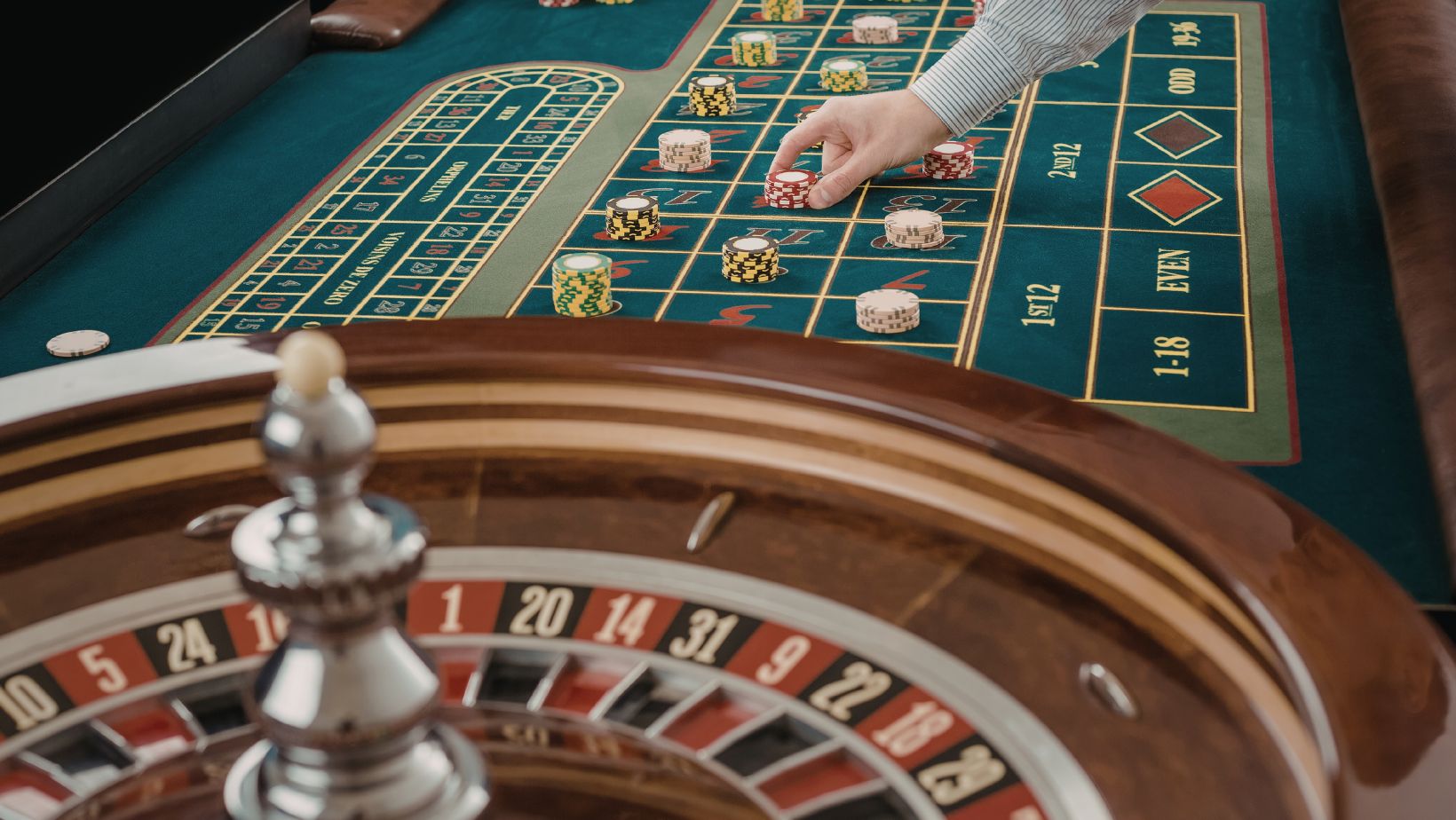
Outside bets are simpler and more frequent winners. Red or black bets cover 18 numbers each and pay 1 to 1, doubling your money if you win. Odd or even bets work the same way. High bets cover numbers 19-36 and low bets cover 1-18, also paying 1 to 1. Dozen bets split the wheel into three groups of 12 numbers and pay 2 to 1. Column bets also cover 12 numbers arranged vertically and pay 2 to 1.
Understanding Chip Placement
Proper chip placement determines which bet you are making. Chips placed entirely within a single number box create a straight bet. Chips placed on the line between two numbers create a split. Positioning chips at the corner where four numbers meet creates a corner bet. Chips on the outer edge of the layout create other bets. Casino staff know these rules well, so incorrect placement gets corrected before the spin.
Probability, House Edge and Realistic Expectations
Every roulette bet carries a mathematical disadvantage favoring the house. This advantage exists because payouts do not match the true probability of outcomes. Understanding this concept separates informed players from those chasing false hope. On a European wheel with 37 pockets, a single number appears once every 37 spins on average. However, casinos pay 35 to 1 instead of the mathematically fair 36 to 1. This 2.70% difference is the house edge.
Consider a simple example. You make ten straight bets of 10 dollars each on different numbers over ten spins. Statistically, you lose all ten because the odds of hitting one specific number in one spin is very low. Your expected loss is 10 dollars. Sometimes you pop a big win. Sometimes you crash harder. The house edge simply means that over thousands of spins, the casino profits and players lose on average.
Common betting myths mislead many players about how probability works in roulette. Some believe previous results influence future spins, thinking that if black has hit five times in a row, red must hit next. This is false. Each spin is independent. The ball has no memory of previous results. Some players use betting systems like doubling their bet after each loss, believing they will eventually win and profit. These systems cannot overcome the house edge and often lead to faster losses when an unlucky streak occurs.
Winning Strategies Based on Odds and Probability
Effective roulette strategy focuses on what you can control rather than trying to predict randomness. You control your bet selection, your stake size, and your decision to stop playing. You cannot control the ball’s landing location. The best approach combines choosing bets with favorable odds and managing your money wisely.
The following strategies help players maintain better control over their experience:
- Choose European roulette over American roulette whenever available due to lower house edge
- Prefer outside bets like red/black or odd/even for more frequent wins and lower volatility
- Set a fixed budget before playing and stick to it regardless of wins or losses
- Avoid betting systems that require increasing stakes after losses
- Limit each session to a few hours to prevent impulsive decision making
- Never chase losses by increasing bet sizes or playing longer
Bet selection matters more than most players think. Outside bets covering nearly half the wheel hit approximately 48.65% of the time on European wheels. This means about one in every two spins returns your money. Inside bets like straights explode rarely but pay much more when they do. Choose based on whether you want frequent small wins or occasional hot streaks.
Session length directly impacts your final outcome. The longer you play, the more spins occur, and the more the house edge cascades. In the short term, luck can override the mathematical advantage. Over extended play, mathematics takes over and losses accumulate.
Bankroll Management and Responsible Limits
Proper money management separates recreational players from those developing gambling problems. Bankroll management means deciding in advance how much money you can afford to lose and staying within that boundary no matter what happens during play.
Key principles for responsible bankroll management include:
- Use only money you have already budgeted for entertainment, not money needed for bills or savings
- Divide your total budget into smaller session budgets to prevent losing everything in one visit
- Set loss limits for each session and leave when you reach that limit
- Never increase your per-bet stake size during losing streaks to recover losses
- Set win targets and consider stopping when you reach them
- Keep a detailed record of your spending to maintain awareness of patterns
These limits exist because roulette, like all casino games, carries risk. The house edge ensures that most players lose money over time. Accepting this reality helps you view casino visits as entertainment with a cost, similar to going to movies or concerts, rather than as income opportunities.
Warning Signs and When to Seek Help
Certain behaviors indicate gambling has become problematic. These include playing with money intended for bills, hiding gambling activity from family members, trying to win back losses through more play, feeling anxious when not gambling, or experiencing relationship problems because of gambling. If you notice these patterns in yourself or others, professional help is available through organizations that support people with gambling concerns.
Game Evolution and Historical Context
Roulette emerged in 17th century France, evolving from various spinning wheel games. The modern version with the 0 pocket was created to increase the house advantage over earlier wheel designs. French mathematicians developed probability theory partly by analyzing roulette outcomes, creating the mathematical foundation for understanding casino odds. This history shows how casinos have always designed games to profit consistently while providing excitement and occasional wins to players.
Understanding roulette requires balancing knowledge of the rules with realistic expectations about odds and house advantage. The game packs simplicity and clear rules, making it accessible to beginners. However, this simplicity masks the mathematical reality that the house always profits over time. Play for entertainment within controlled budgets, choose favorable game versions when available, and remember that wins are fortunate exceptions rather than expected outcomes.